www vs apex vs wildcard forwarding without SEO breakage
Host normalization sounds trivial until root, www, subdomains, paths, and query strings disagree. A clean policy keeps the canonical URL stable and avoids redirect chains.

Host normalization is one of those jobs that looks tiny until it has to carry real traffic.
Someone wants the apex domain. Someone else wants www. A product launch uses a subdomain. A migration sheet includes wildcard forwarding. A campaign link still needs path and query preservation. Before long, the team is not discussing one redirect anymore. It is discussing host policy.
That policy matters because the browser does not care how tidy your spreadsheet looks. It cares whether the final URL is clear, direct, and stable.
If your broader move is a full site migration, keep Website Migration Redirect Checklist open as well. This article is narrower. It is about the host layer.
The host is part of the URL policy
www, apex, and wildcard subdomains are not the same thing operationally, even if they point to the same business.
- The apex often reads cleaner on marketing pages.
wwwcan be easier to standardize across older stacks.- Wildcard subdomains are useful when many hosts should share a rule.
The point is not that one is always better. The point is that you should choose one canonical shape and make the other variants follow it.
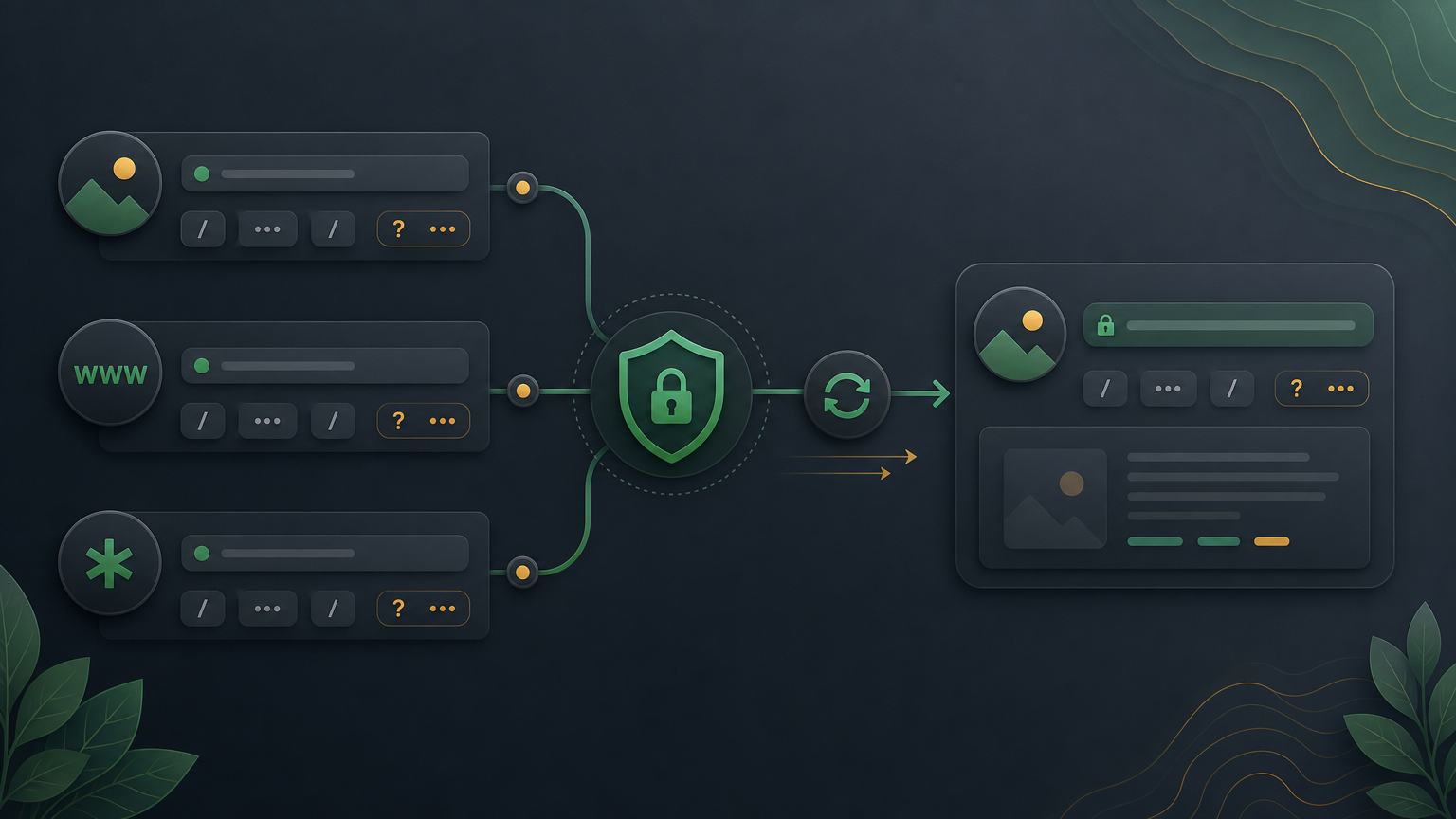
Pick the canonical host before the rest of the work
Do not let the final host decision drift until launch day.
Ask these questions early:
| Question | Why it matters |
|---|---|
Should the public site live on apex or www? | That decides the canonical URL people will see and link to |
| Do subdomains need separate treatment? | Some subdomains are products, not aliases |
| Should paths be preserved? | Deep links and SEO pages depend on it |
| Should query strings survive? | Campaign attribution can disappear if they do not |
| Are there temporary exceptions? | Campaigns and launches may need different intent from permanent moves |
If those answers are vague, the result is usually a redirect chain.
www and apex are a policy choice, not a DNS accident
DNS can point traffic. It does not settle the URL policy by itself.
You still need to decide what should happen when someone visits:
example.comwww.example.comhttp://example.comhttp://www.example.com
The clean version is usually one hop to the final host:
http://www.example.com/pricing?utm_source=email
  -> https://example.com/pricing?utm_source=email
That is much better than:
http://www.example.com/pricing
  -> https://www.example.com/pricing
  -> https://example.com/pricing
One hop is easier to reason about. It is also easier to audit when something changes later.
Wildcard forwarding is useful when the structure stays stable
Wildcard forwarding earns its keep when the path structure still matches between old and new hosts.
For example:
old.example.com/* -> new.example.com/$1That can work well when:
- the content architecture is mostly intact
- paths should stay readable
- there are many old URLs to preserve
- you want to avoid writing one rule per page
It works less well when the information architecture changes a lot. At that point, one-to-one rules are usually safer for the highest-value URLs.
Keep path and query intact when the link still matters
Host normalization is not just about the hostname. It also has to respect the rest of the request.
If a user lands on:
http://old.example.com/docs/api?ref=partner&utm_source=newsletterthe final route should keep the intent unless you have a specific reason not to:
https://example.com/docs/api?ref=partner&utm_source=newsletterThat matters for:
- search pages
- docs
- campaign links
- partner traffic
- bookmarked URLs
If the path or query gets stripped, the redirect may still look technically correct while the business value leaks out of it.
Avoid the chain
The most common host mistake is letting several layers try to be helpful at once.
- HTTP to HTTPS runs at one layer
wwwto apex runs at another- wildcard forwarding runs somewhere else
- the app adds one more canonical rule
The result is a chain like:
http -> https -> www -> finalThat chain is not a strategy. It is a cleanup backlog.
If your current stack already has that shape, Redirect Chains and Loops is the next page to read.
Build a launch matrix before traffic moves
Before you publish host rules, test the URLs that actually matter:
| Test | Example |
|---|---|
| Apex root | https://example.com/ |
www root | https://www.example.com/ |
| Deep path | https://example.com/pricing |
| Deep path with query | https://example.com/pricing?utm_source=email |
| Old host with path | https://old.example.com/blog/post-1 |
| Wildcard subdomain | https://docs.example.com/guide |
Then confirm:
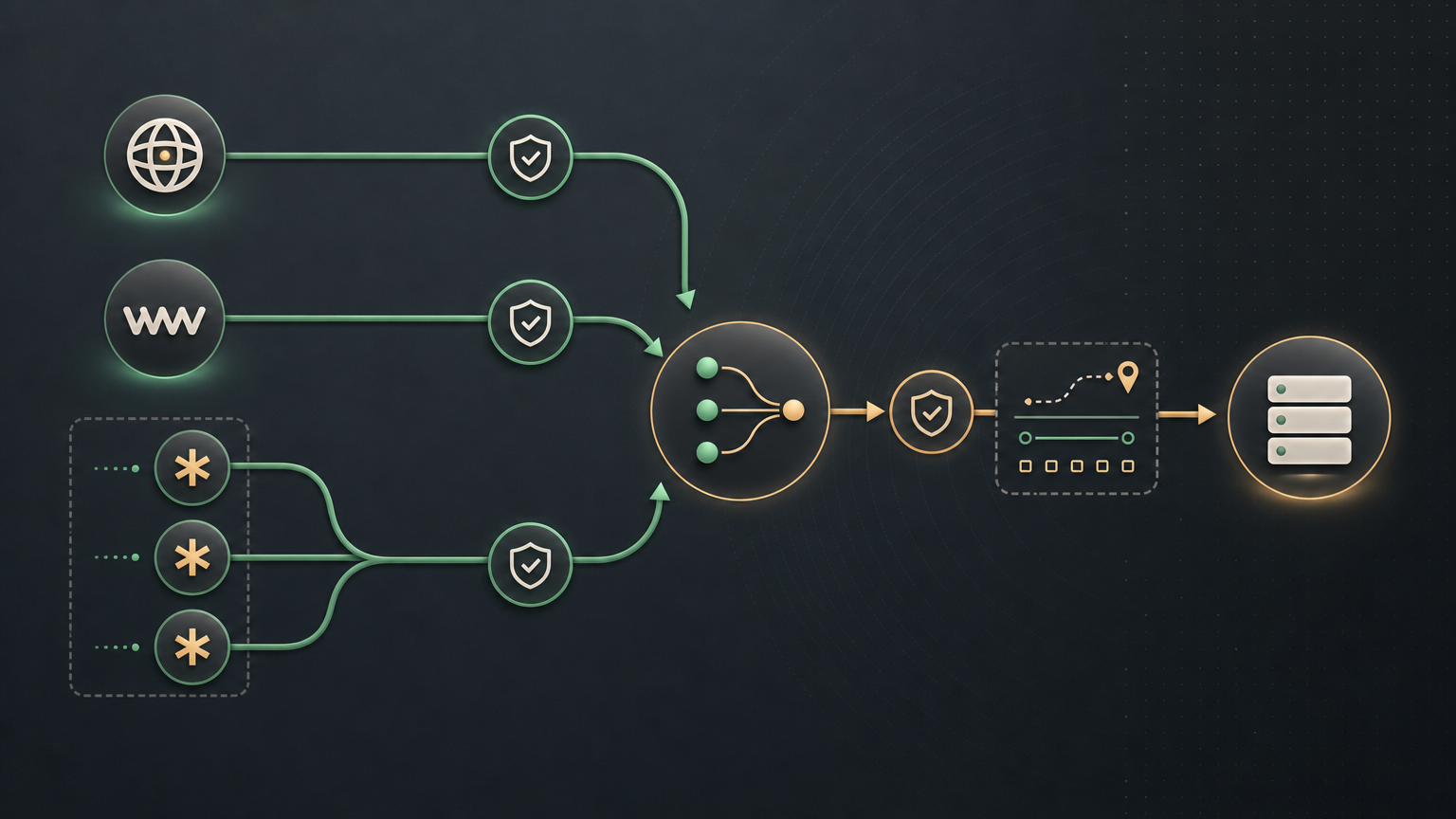
- final host is the one you intended
- path survives
- query survives
- status code matches the intent
- there is no extra hop hiding in the middle
Where UrlEdge fits
UrlEdge is useful when host normalization needs to be managed as a routing policy instead of a server edit.
- Free Redirect Service for automatic HTTPS and wildcard forwarding
- Advanced Redirect Rules when host behavior has conditional logic
- Redirect Checker to inspect the actual hop path
- Redirect Domain Preserve Path and Query for the deeper implementation pattern
The practical value is simple. One place owns the canonical host, the other host variants, and the rule that says what happens next.
FAQ
Should I always use apex instead of www?
No. Either can work. The important part is choosing one canonical host and making every other variant follow it cleanly.
Can wildcard subdomains share the same rule?
Yes, if the path structure is still aligned. If the structure diverged, use explicit mappings for the important URLs.
Do I need DNS changes for host normalization?
Sometimes, but DNS alone does not replace HTTP redirect policy. The user-visible URL change still has to happen at the routing layer.
Should campaign links preserve query strings?
Usually yes, unless you have a specific reason to drop or rewrite them. Attribution is hard to recover after the fact.
References
Set the canonical host once
Forward root, www, and wildcard subdomains with automatic HTTPS, path preservation, and a single canonical destination.
Try Free Redirect ServiceRelated Articles
View all
Link Firewall for Paid and Affiliate Traffic: Block Bots, Proxies, and Bad Clicks
Not every bad click is fraud, but every bad click still costs money. A link firewall lets you decide what should happen before paid and affiliate traffic reaches the destination.

Serve Verification Files at the Edge: ads.txt, security.txt, AASA, and assetlinks.json
Some files have to live at the root or under /.well-known/. If your CMS makes that awkward, an edge response layer can serve them directly without moving the whole site.