Branded Campaign Links with UTMs, QR Codes, and Partner Traffic
A campaign link has to stay readable in public, preserve attribution in analytics, and remain editable after it has been printed, posted, or handed to a partner.
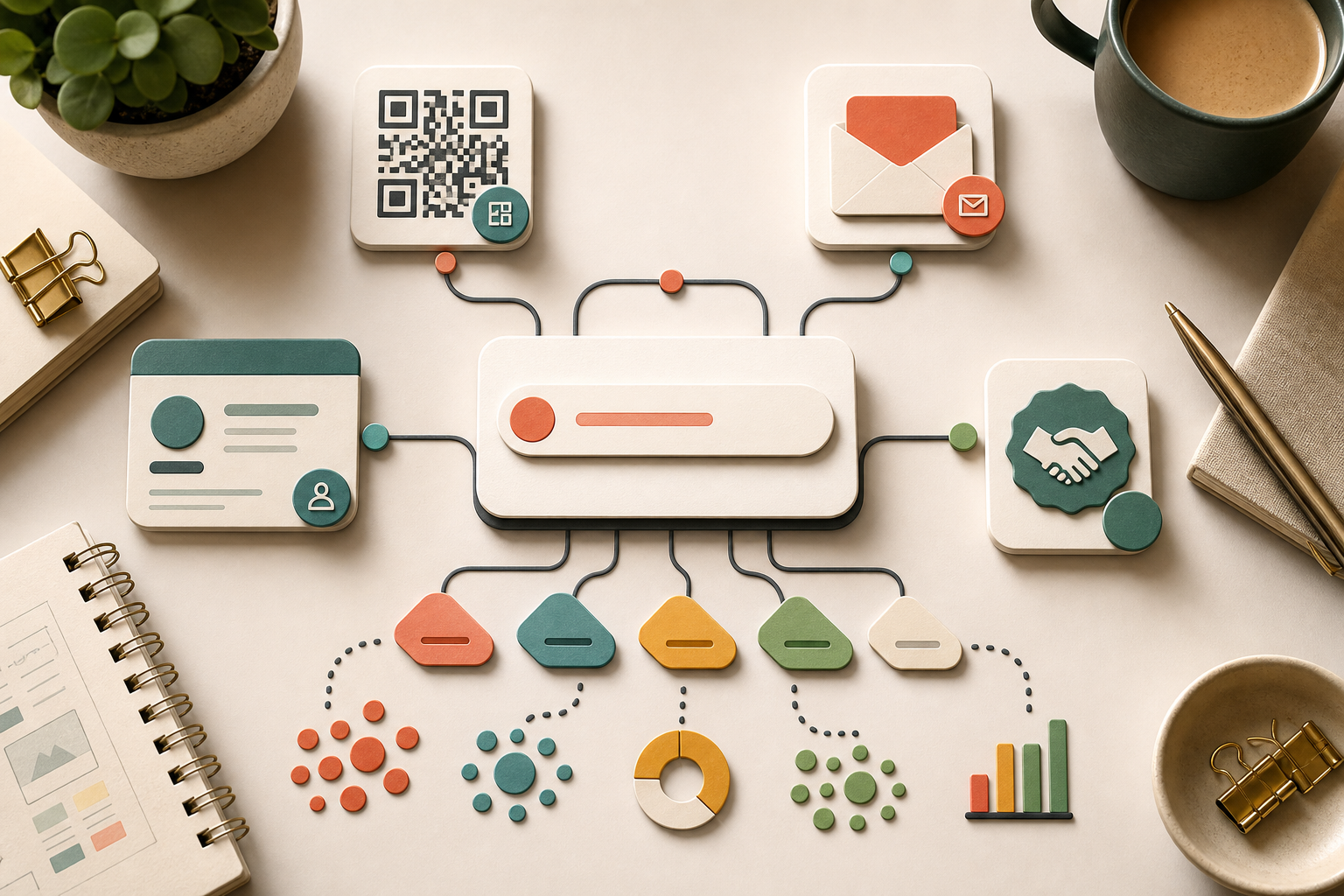
The public link is usually the last asset people check before a campaign ships.
That is strange, because the link is the piece every other asset depends on. It sits behind the QR code, the influencer bio, the email button, the partner banner, the sales deck, the SMS, and the paid ad. If it loses UTM parameters, points at the wrong page, shows a broken preview, or cannot be edited after print, the campaign can still look polished while reporting falls apart.
A branded campaign link has three jobs:
- it needs to look trustworthy enough for someone to click
- it needs to carry clean attribution into analytics
- it needs to be fixable after the link has already been distributed
That is the lane for UrlEdge. Not "make a short URL and forget it." The better model is a small campaign routing layer: build the tracked destination, wrap it in a branded public URL, preserve the parameters through the redirect, test the real channels, and keep a fallback ready.
The campaign link stack
Most campaign links are assembled backward. Someone copies a landing page URL, adds a few UTM parameters, shortens it, then pastes it into every channel.
That works until one detail changes.
The landing page moves. The agency uses Instagram while the email team uses instagram. A QR code is already printed. A partner wants their own ID in the URL. A social preview pulls the wrong image. Paid reporting shows direct traffic because a redirect stripped the query string.
A safer stack looks like this:

| Layer | Decision to make |
|---|---|
| Destination | Which page should the visitor eventually see? |
| Tracking | Which UTM, click ID, coupon, partner, or affiliate values must survive? |
| Public URL | What branded link should people see in ads, QR codes, bios, and messages? |
| Redirect behavior | Should the rule preserve all query strings, allowlist specific parameters, append defaults, or strip noise? |
| Channel QA | Does the link open correctly in the real app, scanner, inbox, or ad preview? |
| Recovery | Can the team change the destination or pause the route without replacing every public asset? |
That puts campaign links closer to redirect management than to a UTM spreadsheet. Attribution is often won or lost before the landing page loads.
UTMs are naming rules, not decoration
Google's URL builder and Analytics documentation treat campaign parameters such as utm_source, utm_medium, and utm_campaign as structured inputs for reporting. That structure is useful only if teams use it consistently.
For a practical campaign, decide the naming before anyone creates links:
| Parameter | Use it for | Good examples | Weak examples |
|---|---|---|---|
utm_source | The place or partner that sent the click | instagram, newsletter, partner-acme, qr-store-12 | social, campaign, homepage |
utm_medium | The channel type | paid-social, email, offline, affiliate, sms | spring-sale, instagram |
utm_campaign | The campaign name | spring-launch, bfcm-early-access, app-install-q2 | may, test, promo |
utm_content | The creative, placement, or variation | bio-link, story-creator-a, window-qr, hero-button | version1, link, blue |
utm_term | Paid keyword or targeting term when needed | brand-search, competitor-keyword | unused filler |
The point is not to make URLs longer. The point is to make reports readable when the campaign is over.
If one team uses Email, another uses email, and a partner uses newsletter, the campaign did not get three channels. It got fragmented data.
Branded links keep the public surface clean
A raw tracked URL is usually ugly:
https://www.brand.example/spring-offer?utm_source=instagram&utm_medium=paid-social&utm_campaign=spring-launch&utm_content=creator-a-storyThe public version should be cleaner:
https://go.brand.example/springThat branded URL is easier to read, easier to say, easier to scan, and easier to trust. The tracked destination still carries the measurement details behind the redirect.
Use separate public links when the operating question is different:
| Public link | Why separate it |
|---|---|
/spring-email | Email and lifecycle teams need source-level reporting |
/spring-qr-store-12 | A store, event, poster, or package needs its own QR measurement |
/spring-creator-a | A creator or partner needs clean attribution |
/spring-bio | Bio traffic behaves differently from paid social |
/spring-vip | A private list may need a different fallback or expiration |
Do not create separate links just to create clutter. Create them when a different owner, channel, offer, partner, or fallback decision will matter later.
QR codes make link mistakes expensive
QR codes are unforgiving because they leave the screen.
Once a code is on packaging, a booth sign, a receipt, a store window, or a printed card, changing the destination can become a logistics problem. The QR should point to a branded redirect you control, not directly to a long landing page URL with campaign parameters baked into the print file.
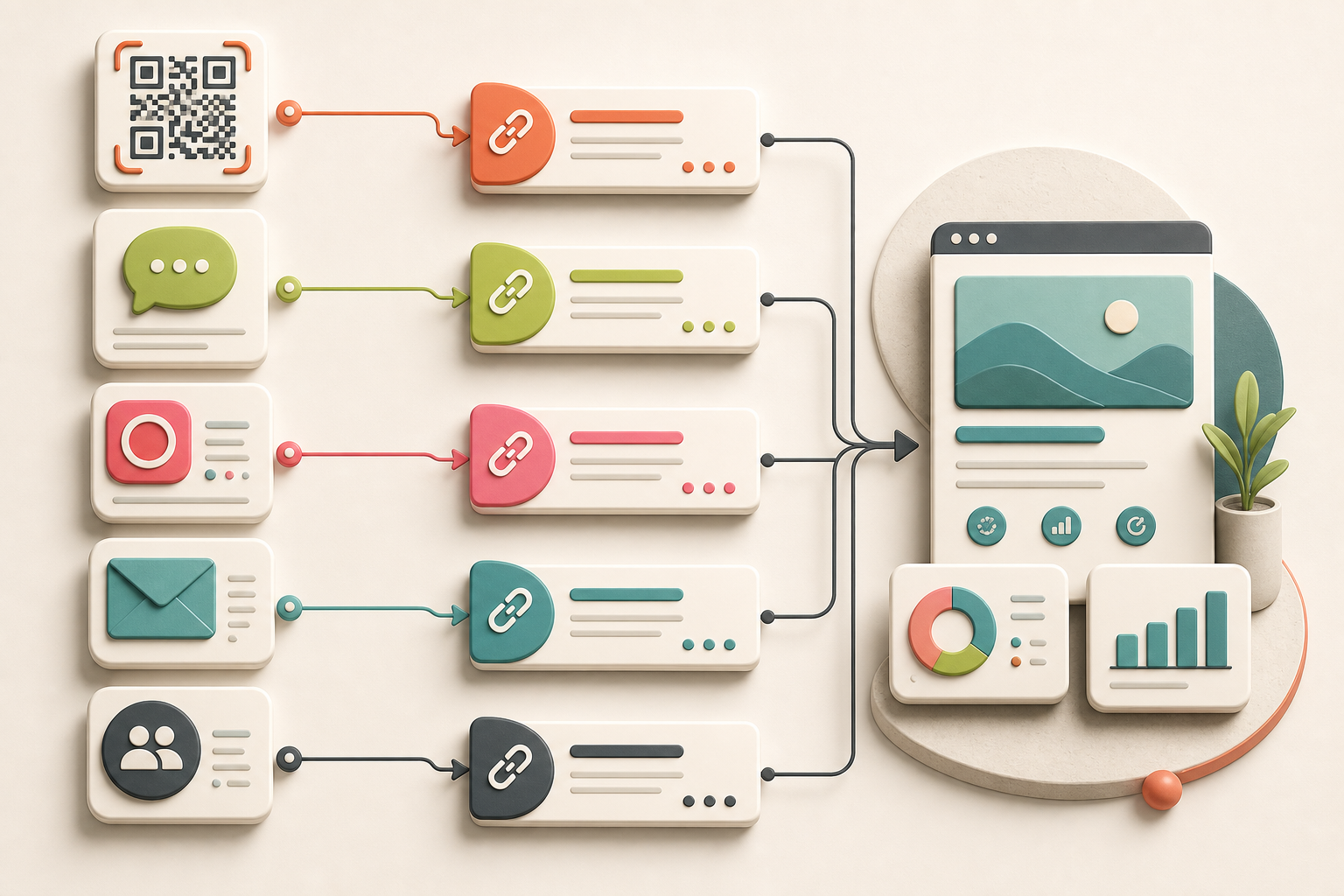
For QR campaigns, decide:
- whether each store, event, poster, or package batch needs a separate public link
- whether the campaign should route by country, device, or language
- which UTM values should be appended by the redirect rule
- where the QR should go after the campaign ends
- who owns the fallback if the destination is unpublished
Offline links should be boring in production. The drama belongs in the creative, not in the URL layer.
Partner and affiliate links need stricter rules
Partner traffic is where link management gets political. The partner wants credit. The campaign owner wants clean reporting. The landing page owner wants a stable destination. Finance or revenue operations may care about commission logic.
The public link should make those rules explicit:
| Need | Campaign link policy |
|---|---|
| Partner attribution | Preserve partner, affiliate, sub_id, or agreed UTM values |
| Offer control | Route to the approved landing page, not a partner-edited copy |
| Destination changes | Change the target in one rule when the offer changes |
| Fraud or low-quality traffic | Add a conservative protection layer when paid or affiliate traffic needs filtering |
| Reporting | Separate partner links when performance needs to be reviewed partner by partner |
UrlEdge's Link Firewall can fit here, but do not treat it as a magic fraud recovery system. Use it for basic protection policies, blocked-region handling, risky traffic controls, and destination protection. Keep claims in reporting and finance systems grounded in your actual data.
Social previews are part of the click
Campaign teams often test the destination but forget the preview. That is a mistake. In WhatsApp, LinkedIn, Slack, iMessage, Facebook, and X, the preview can be the difference between a link that feels legitimate and one that looks broken.
Before launch, check:
- title
- description
- preview image
- image crop
- canonical URL behavior
- whether the app caches old metadata
- whether a redirect changes what the crawler sees
The Open Graph protocol defines common metadata such as title, type, image, and URL. Platforms still have their own quirks and caches. Use Social Preview Customizer when the shared link needs a clean card before the campaign goes out.
A launch checklist that catches real failures
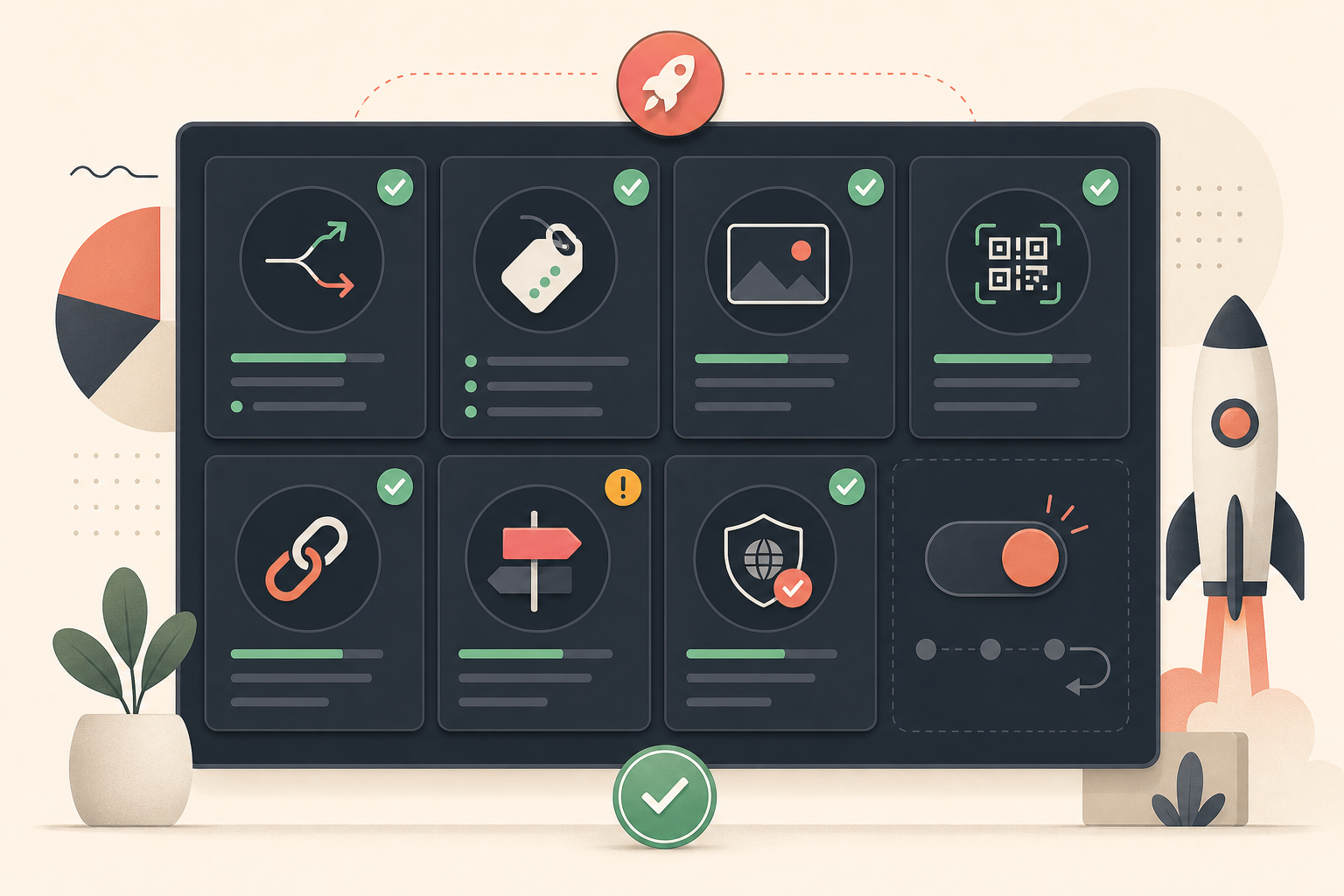
For campaign links, QA should cover the route, not just the page.
| Check | What can fail |
|---|---|
| Final destination | The landing page returns 404, is unpublished, or redirects again |
| Status code | A temporary campaign accidentally uses a permanent redirect |
| Query handling | UTMs, click IDs, coupons, or partner IDs disappear |
| Channel app | The link behaves differently in Instagram, WhatsApp, SMS, email, or an in-app browser |
| QR scan | The code scans slowly, points to staging, or cannot be changed later |
| Social preview | The title, image, or description is wrong or cached |
| Partner split | Partner A and Partner B share one link, so reporting is unusable |
| Fallback | The campaign ends with no approved destination |
| Rollback | Nobody knows how to undo a bad route |
If the campaign is temporary, use a temporary redirect such as 302 or 307. Save 301 and 308 for durable URL moves. That one choice prevents a short campaign from sending the wrong long-term signal.
Where UrlEdge fits
Use UrlEdge when campaign links need more than a shortened URL.
Relevant product surfaces:
- UTM Builder for clean campaign parameters
- Redirect Management for editable branded routes, publishing, analytics, and rollback
- Temporary 302 Redirects for campaign destinations that should not be permanent
- Social Preview Customizer for link cards before launch
- Redirect Checker for final URL, status code, and chain validation
- Link Firewall for conservative protection rules around paid, partner, or affiliate traffic
- Broken Link Monitor when a campaign destination may drift after launch
The useful shift is ownership. Marketing can ship clean public links. Analytics can read consistent UTMs. Partners can get distinct attribution. Engineering does not have to redeploy the site for every destination change. And when a printed QR code or partner link needs a new target, the team changes the route instead of chasing every place the link has already traveled.
FAQ
What is a branded campaign link?
A branded campaign link is a public URL on your own domain, such as go.brand.example/spring, that routes to a campaign destination while preserving tracking parameters and remaining editable after launch.
Should I put UTM parameters in the public link?
Usually no. Keep the public link short and branded, then attach or preserve the UTM parameters behind the redirect. The reader sees a clean URL while analytics still receives structured campaign data.
Do QR codes need different links for each placement?
Not always. Use separate QR links when you need to compare stores, events, posters, packages, regions, or creative batches. One generic QR code is simpler, but it can make reporting useless.
Should campaign links use 301 or 302 redirects?
Most campaign links should use a temporary redirect such as 302 or 307, because offers, landing pages, and partner destinations often change. Use 301 or 308 only when the move is meant to be permanent.
How do partner links differ from normal campaign links?
Partner links often need partner IDs, affiliate IDs, sub IDs, commission reporting, and stricter review. They should have clear parameter rules and separate public links when partner-level reporting matters.
References
Build campaign links that stay measurable
Create branded links, preserve UTM parameters, validate previews, and keep destinations editable after launch.
Open UTM BuilderRelated Articles
View all
www vs apex vs wildcard forwarding without SEO breakage
Host normalization sounds trivial until root, www, subdomains, paths, and query strings disagree. A clean policy keeps the canonical URL stable and avoids redirect chains.

Link Firewall for Paid and Affiliate Traffic: Block Bots, Proxies, and Bad Clicks
Not every bad click is fraud, but every bad click still costs money. A link firewall lets you decide what should happen before paid and affiliate traffic reaches the destination.